artpoolindustry
Home  >> Products  >> By Manufacturer  >> Blue-White  >> articles  >> artpoolindustry  >>


Custom Search

Call For Quote 1 800 230-1426

Live chat by BoldchatPlus
Live chat by Boldcenter


          Proud Members of:


AWT Logo Sm1


 Pump Training

Home   |  Pumps  | Flowmeters  | Tank Systems   |  What's New?  | 

  Inside information on Chemical Feeders in the swimming pool industry
  02/21/2003


Today's modern swimming pools may include one or more of the above  pumps.  Centrifugal pumps are used for pumping large amounts of water,  of particular importance in water recirculation.  Piston pumps are of  importance in water reclamation, such as reverse osmosis systems.   Displacement style pumps or more specifically, reciprocating  diaphragm, is a common way to pump chlorine, we know them as automatic  chlorinators.


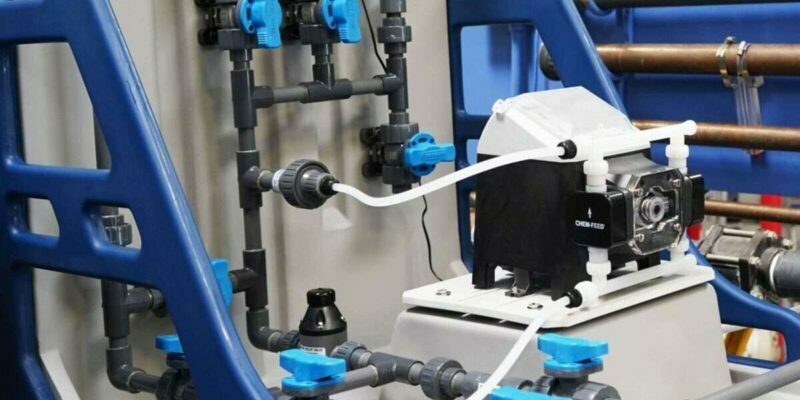
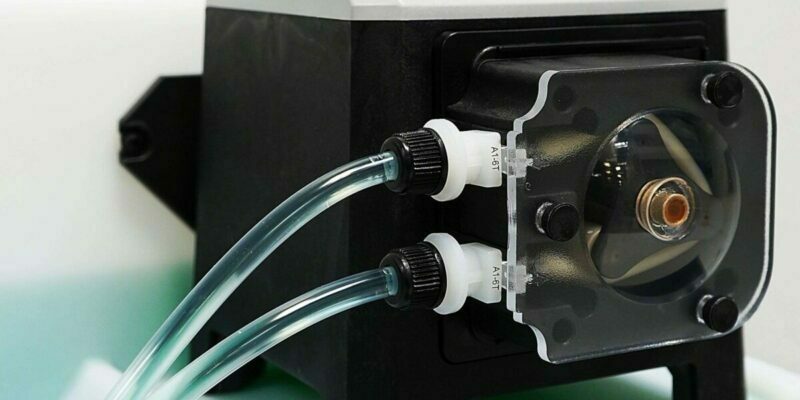
Now we've established the  importance of pumps in our lives and in particular, the pool industry,  allow me to focus in on pumps used for chemical delivery.  Although  these pumps are properly called displacement pumps (remember) both  reciprocating diaphragm, and rotary peristaltic, in the industry, are  often called: Chlorinators, chemical feeders, injectors, metering  pumps, diaphragm pumps, chem-feeds, and the rotary peristaltic is  often referred to as a tube, or squeeze tube pump.

Now that we've  covered some of the history, I'd like to share some of what I've  picked up over the years. Working for a well-known chlorinator  manufacture for nearly forty-five years has taught me quite a lot.   Some of what I have learned may be valuable to you, a pool industry  professional. I would like to clear up some myths, or assumptions I've  been asked about from time to time.

    Chlorinators  should be trouble free.   Of all your pool equipment, the chlorinator probable will require  the most attention.  The reason is simple, you are dealing with more  than a mechanical pump, such as; water chemistry, bather load, water  temperature, and chlorine.  When you put them all together there is  more involved than a chlorinator.  If any of the above items are  neglected your job will soon become more complicated.
     

    Chlorine is on  its way out.   Let's be honest about this.  This is a case where the good  definitely outweighs the not so good.  Don't even try to imagine our  lives without chlorine as a disinfectant.  Alternative forms of  disinfectants will continue to play a larger roll in our industry,  and that is a good thing.  Make no mistake chlorine is still the  disinfectant of choice in our industry, it simply works well and the  cost benefit isn't worth arguing.

Most pool  professionals have their favorite type of chlorine.  As a  manufacturer, I do too.  Let's go over some selections.  Liquid  chlorine (sodium Hypo), is usually purchased at your favorite  distributor, dealer or chemical company, some regions the chemical is  delivered on a route basis.  This industrial strength chlorine runs  anywhere from 9% to 15% active chlorine. The chlorine you purchase at  the super market is considerably weaker about 4% chlorine.  Sodium  hypo, or liquid chlorine is the chemical of choice for most mechanical  chlorinators, some will argue that point, but for the most part its  liquid chlorine.  The problems with liquid chlorine are; it is heavy,  cumbersome, and transporting it can be hazardous.  Liquid chlorine  weakens over time.  Dry or powder chlorine also has its advantages,  and disadvantages.  It is certainly easier to store, and transport.   Some kinds also have a built in stabilizer so your Ph rarely needs  adjusting, but now you have to be careful of too much accumulation of  stabilizer, which will certainly cause eye irritation, etc.  Some of  the challenges are obvious; you have to mix a slurry so it can be  pumped.  The amount of undissolved solids will over time foul check  valves.  Peristaltic pumps are indicated if you choose to pump a  chlorine slurry.  Peristaltic pumps easily handle chlorine slurries.  With either the diaphragm or peristaltic chlorinator, avoid trichlor,  this very potent form of chlorine is simply just too corrosive for  mechanical feeders and is not recommended.

Some tips on maximizing the  performance of your mechanical chlorinator (diaphragm, or peristaltic  style)

    Keep variables to a  minimum.  Such as, chlorine strength, type of chlorine used, and  setting on chlorinator feed rate.  Example; if you keep the chlorine  strength consistent, as the bather load increases, and the days are  warmer, you'll need to increase the amount of chlorine to be feed.  On a peristaltic pump, adjust the on time up (pump longer), with a  diaphragm pump increase the cam setting, or pulse rate.  If you  tamper with chlorine strength (usually a problem with slurries), and  chlorinator feed rate, you will just drive yourself crazy.  Minimize  your variables.
     

    Avoid running chemical  container dry.  Although the pump may not be mechanically  harmed, pumping air will cause the valves to build up a residue of  dried chlorine (salt), after detailing the check valves several  times it should become clear running the chlorinator dry simply  creates more work.
     

    Purge air out of the pump  tubing. After changing out chemical containers make sure, the  pump is primed and most air is purged out of the pump head. The  system just works better when most of the air (gasses) are purged  form the lines (eye protection please).
     

    Regular maintenance.  At least every six months inspect, and if necessary, replace your  diaphragm.  Also, inspect the top and bottom valves; clean or  replace. If you are using a peristaltic feeder, change tubes out  regularly.  Also keep your eye on the roller assembly; the rollers  do require periodic lubrication.  Rollers that are frozen, not  rolling correctly will dramatically shorten the life of your pump  tube.
     

    Keep spare liquid ends (assembled pump head kits) handy, as we all know Murphy's Law,  "Problems usually occur at the most inopportune times", it's far  easier to replace a diaphragm and pump head complete with valves  (usually just 4 screws) than detailing every o-ring and ball seat.   Using peristaltic pumps?  Keep pump tubes and roller assemblies on  hand. Time is money.
     

    Inspect your foot valve  strainer – At least quarterly, or a frequently as necessary.
     

    Avoid trying to prime  against lime pressure - Chemical Injectors are easy to prime  when the discharge (pressure) line is removed or vented.  After the  pump is primed re-attach the discharge line to the top pump head  valve, or close the vent relief (eye protection cannot be over  stated).
     

    Always wear eye protection when working on chemical injectors or when changing out containers,  or adding chemical.
     

    Want to change chemical  brands?  Avoid changing chemical brands without researching the  compatibility on your injector pumps.  I know we are pressed for  time, this is not the time to cut corners, find out if the new  chemical is compatible with your pump before you switch, at least  ask a colleague who has had some experience with the product.
     

    A flow indicator is a  fantastic diagnostic tool - Installed on the suction tubing of  your chlorinator (flow indicator) is an outstanding diagnostic tool,  at a glance you can see if the pump is working properly. No  indication means your chlorinator isn't pumping.  If the ball  indicator is bouncing violently it may indicate too much back  pressure from a plugged injection fitting. The indicator is simply a  window to monitor your system.
     

    Chemical controllers are of  growing importance to our industry.  Most controllers work well with  automatic chlorinators; stick with the industry leaders, those with  a proven track record.  Avoid elaborate so-called turnkey systems  that claim to do everything. Caveat emptor.


Cannon Water Technology Inc. All Rights Reserved © 1999 1 800 230-1426